PERSBERICHT
From a question in 2023 to the Stone Paper Bible
PERSBERICHT
From a question in 2023 to the Stone Paper Bible
Dutch international print broker Drukcase develops a waterproof and highly durable Bible concept after a challenge raised within the international Christian publishing community
ZWOLLE, THE NETHERLANDS – October 2026 – What if a Bible could withstand water, humidity, intensive daily use and demanding transportation conditions far better than a conventional paper Bible?
That question was first raised with Dutch international print broker Drukcase during an international Christian conference in 2023.
Drukcase had been invited to the conference because of its international expertise in print production and its worldwide network of printing partners. Rather than operating its own printing facility, the company acts as a print broker, connecting publishers and organizations with specialized manufacturers and production expertise around the world.
Today, that network consists of more than 60 printing partners, including specialist Bible printers, across several continents. Through this network, Drukcase already coordinates Bible and Christian publishing projects for international mission organizations, Christian organizations and Bible publishers, including organizations from the United States.
It was within that international Christian environment in 2023 that an intriguing challenge emerged:
Could a Bible be produced from a material that would survive conditions in which conventional paper is particularly vulnerable?
For Drukcase founder and CEO Cees Scholten, the question did not disappear after the conference.
“The idea sounded relatively simple: make a Bible that can withstand water and demanding conditions. But a Bible is an extremely complex product. It contains hundreds, sometimes more than a thousand, very thin pages. Those pages still have to print well, fold correctly, bind reliably and remain pleasant to use. We realized very quickly that this would require much more than simply choosing another type of paper.”
Turning a question into a development project
The question became a development journey.
Drukcase began exploring the possibilities of stone paper, a mineral-based material whose primary component is calcium carbonate rather than conventional wood pulp.
What followed was an extensive process of testing and refinement involving materials, printing, folding, binding and practical durability, working together with specialized international production partners.
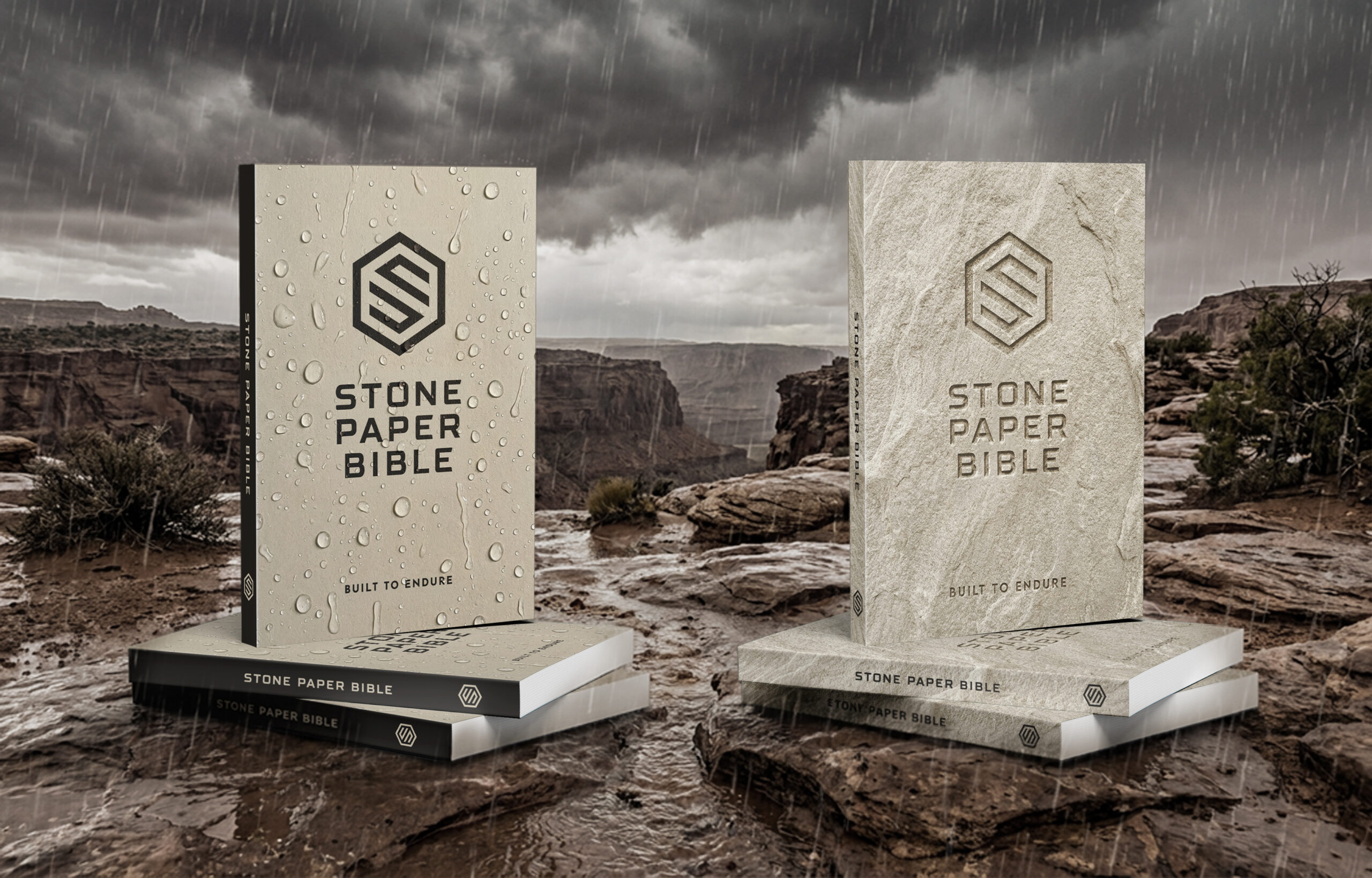
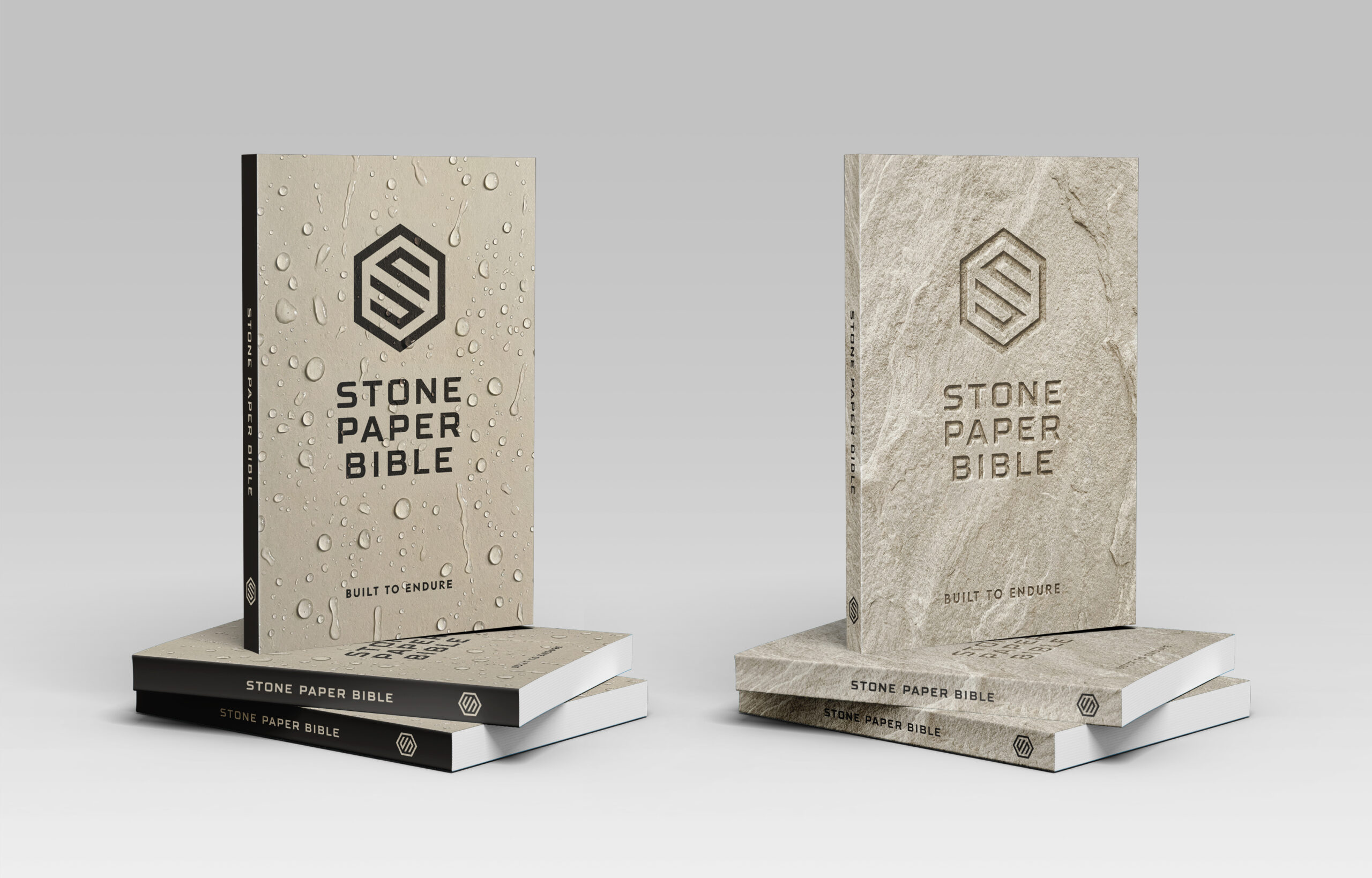
Physical Stone Paper Bible examples have now been produced and subjected to practical testing. The material is waterproof, highly tear-resistant and exceptionally durable, while still needing to meet the demanding production requirements of a Bible.
The project has therefore moved well beyond an initial idea, although Drukcase emphasizes that the Stone Paper Bible is still a developing proposition rather than a product already being produced commercially on a large scale.
The company is now exploring its potential applications together with international Christian organizations, mission organizations and Bible publishers.
Interest has also emerged from publishers and Christian organizations in the United States.
“For us, this was never about creating a novelty Bible,” says Scholten. “The real question is whether this technology can help Scripture remain usable for longer in places where replacing a damaged Bible may be difficult, expensive or simply not practical.”
Why durability matters
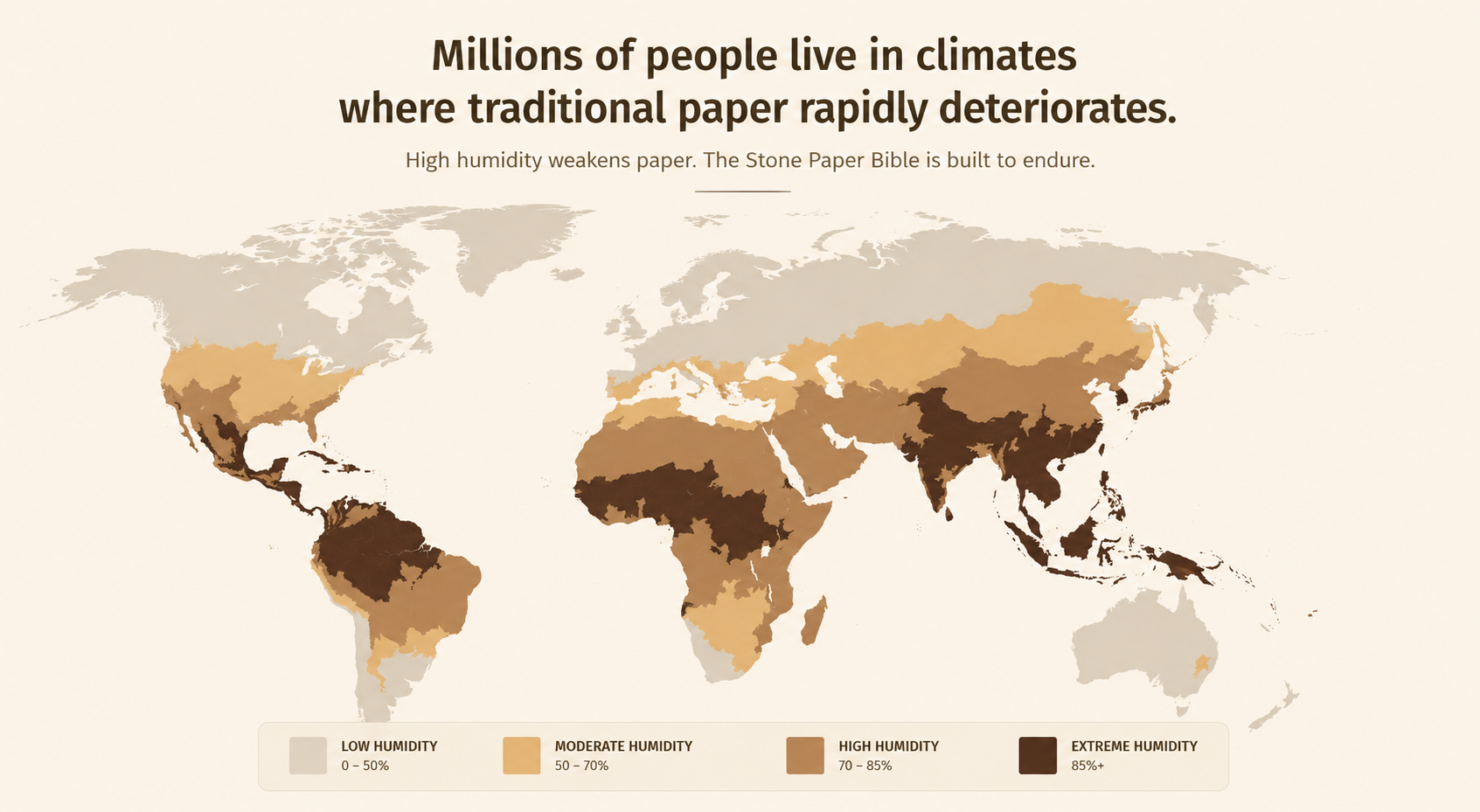
In many parts of the world, a Bible faces circumstances very different from those of a book sitting on a shelf in Europe or North America.
Books can be transported over long distances, exposed to high humidity and rain, stored in difficult circumstances and shared or used intensively.
For mission organizations and Bible publishers working internationally, durability can therefore become much more than a technical specification.
It can influence how long a Bible remains in someone’s hands.
That is one of the reasons Drukcase believes the potential significance of the Stone Paper Bible extends beyond printing technology.
“Through our work with international mission organizations and Bible publishers, we see that Bible distribution is not simply about producing and delivering a book,” Scholten says. “It is about getting Scripture into people’s hands — and helping it stay there.”
A different approach to paper and sustainability
The development also raises another important issue: sustainability.
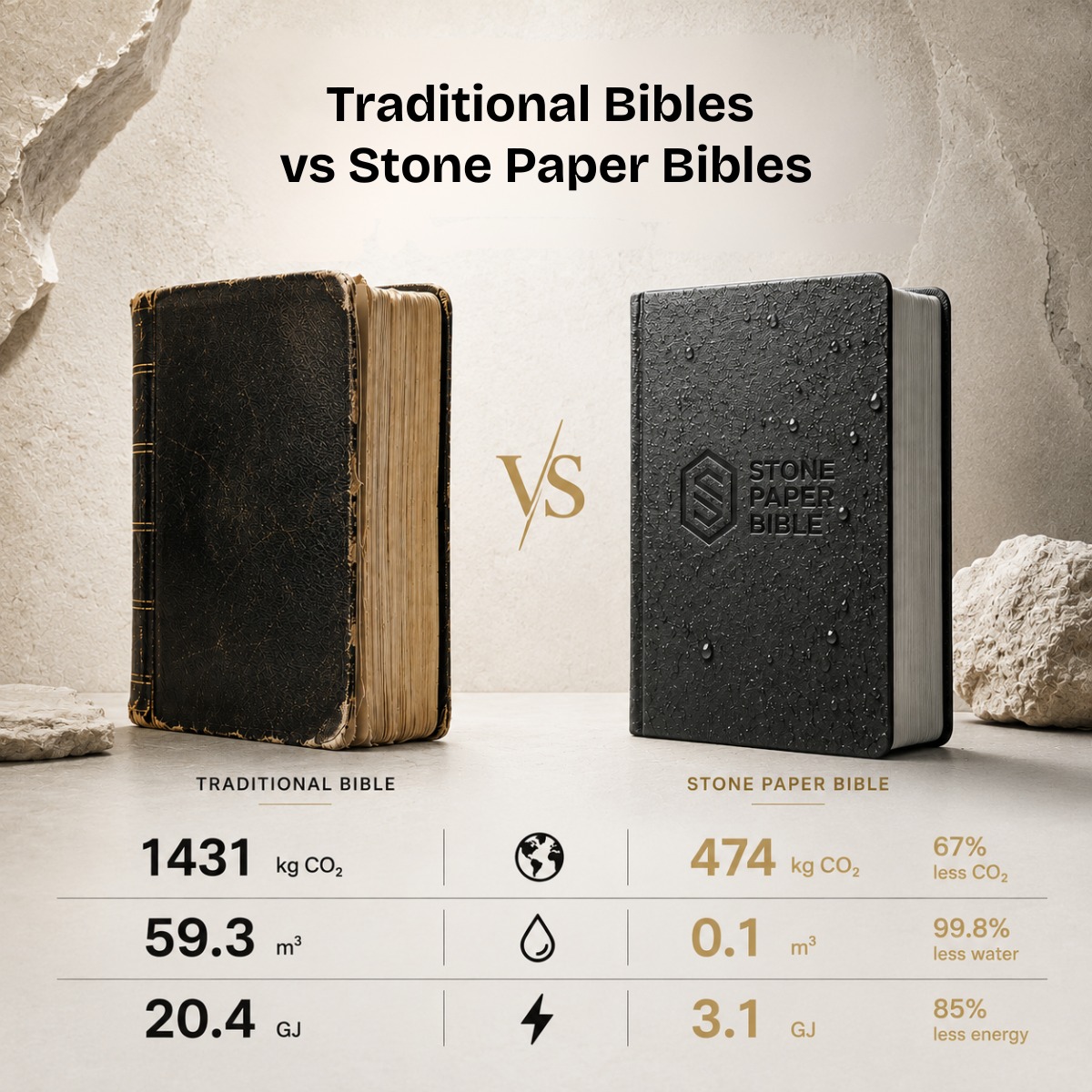
Stone paper differs fundamentally from conventional wood-pulp paper. Its primary component is calcium carbonate, meaning trees are not required as the primary raw material.
Its production process also has a significantly different use of water and energy compared with conventional paper production.
Drukcase believes that environmental and technical claims surrounding a relatively new material should be transparent and verifiable.
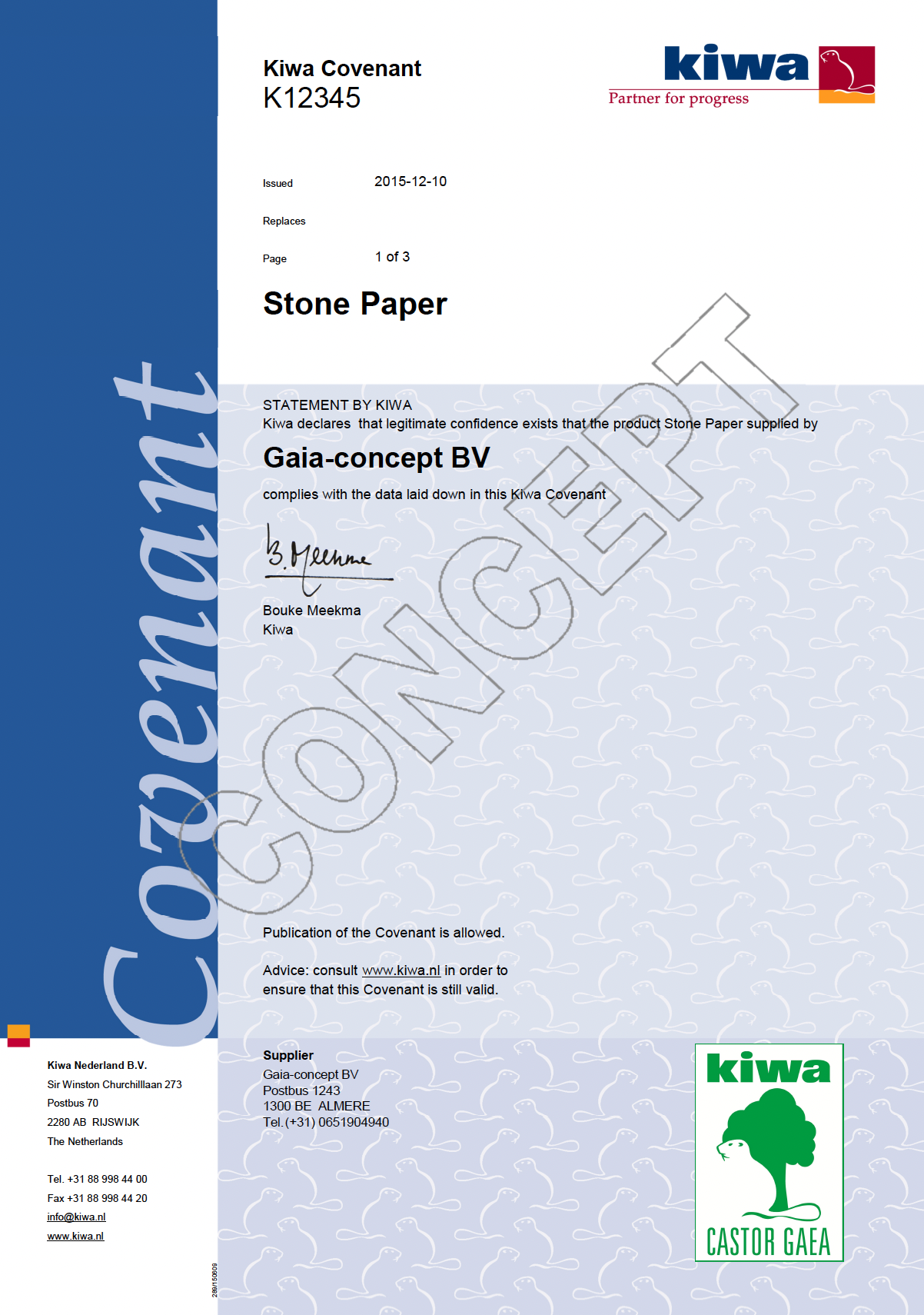
The Stone Paper material used in the development is covered by a Kiwa Covenant issued to material supplier Gaia-concept BV. Information about the material composition, sustainability characteristics, relevant certifications and Kiwa documentation is publicly available through the Stone Paper Bible website.
For Drukcase, however, sustainability is not only about the production process.
Durability matters too.
If a Bible remains usable considerably longer and does not need to be replaced as quickly, that becomes part of the sustainability discussion as well.
It raises an interesting question for publishers and mission organizations:
Should the environmental impact of a Bible be measured only by how it is produced — or also by how long it remains in use?
From Dutch innovation to international interest
The development of the Stone Paper Bible has already attracted media attention in the Netherlands.
The project and the story behind it have been covered by national newspapers, Christian publications and online news media.
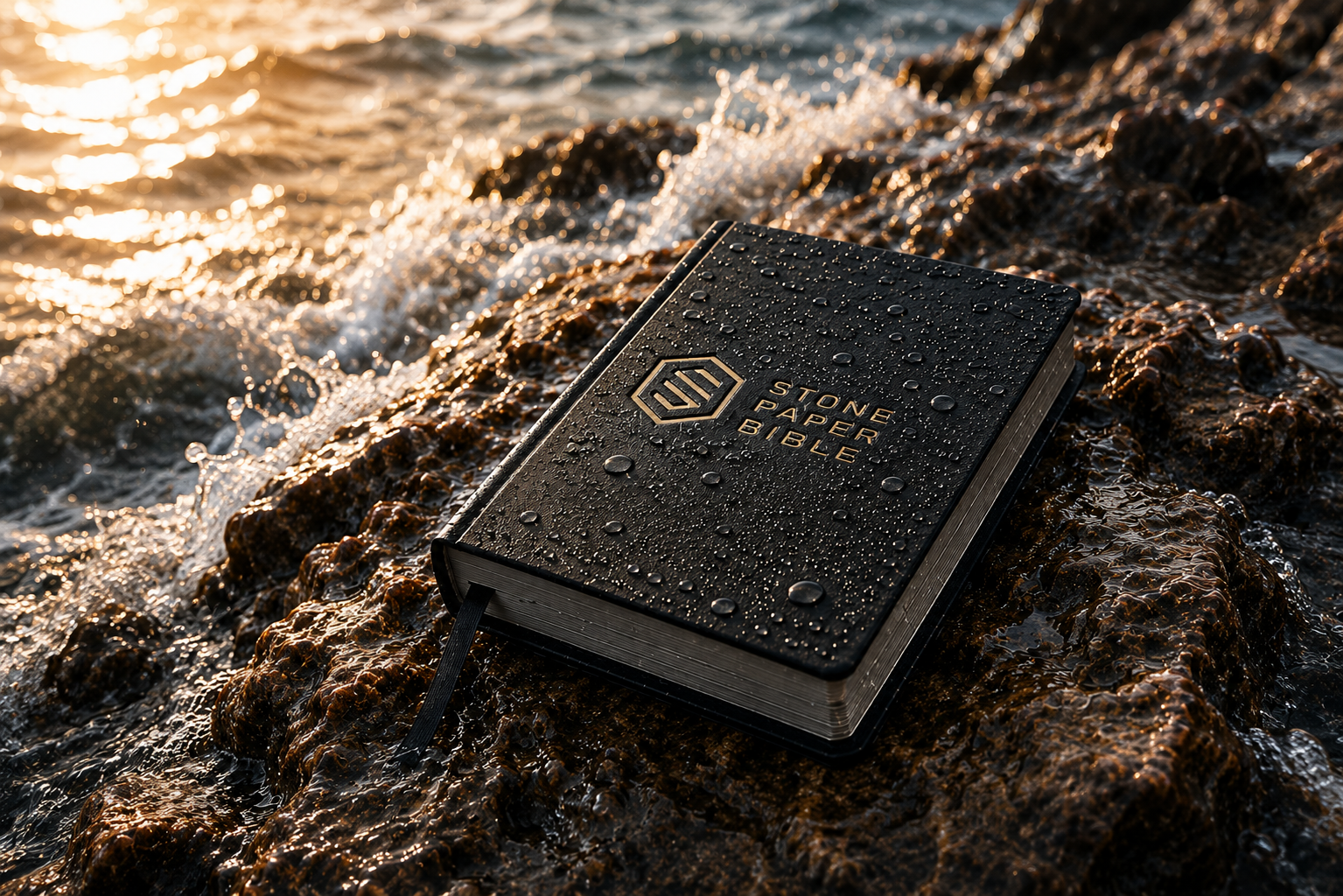
Practical tests have also been shared publicly, including demonstrations showing how the Stone Paper Bible responds to water and demanding physical conditions.
According to Scholten, that visual evidence has helped people understand immediately why the concept could have applications far beyond the Netherlands.
“You can explain the technology in great detail, but when people actually see a Bible exposed to water and see what happens afterwards, the conversation changes. They immediately start thinking about where a Bible like this could be useful.”
Those conversations are increasingly becoming international.
Drukcase is already in contact with Christian organizations, mission organizations and Bible publishers across different parts of the world, including the United States, about Bible and Christian publishing projects.
The company believes those existing relationships are particularly valuable in the next stage of the Stone Paper Bible development.
Rather than deciding from the Netherlands where the product should be used, Drukcase wants to hear from the organizations actually involved in producing, distributing and using Bibles internationally.
Technology serving the Gospel
For Scholten, who is himself a Christian entrepreneur, there is also a personal dimension to the project.
In an increasingly digital world, enormous technological progress is being made in how information is distributed. Yet throughout large parts of the world, the physical Bible continues to have enormous significance.
The Stone Paper Bible brings those two worlds together: modern material and production technology applied to a book with a history stretching back thousands of years.
“The technology itself is not the final story,” says Scholten. “The real story is what this technology could make possible.”
That philosophy is summarized in a simple phrase used by the project:
Innovatie dienend aan het Evangelie
The question first raised in 2023 therefore remains the question driving the development today:
Could a more durable and sustainable Bible help God’s Word remain in people’s hands longer — particularly in places where the physical Bible faces some of the world’s most challenging conditions?
For Drukcase, finding the answer has now become an international conversation.
about drukcase
Drukcase is an independent international print broker based in Zwolle, the Netherlands.
Rather than operating its own printing facilities, Drukcase connects publishers and organizations with a worldwide network of more than 60 specialized printing partners, selecting production locations, technologies, materials and expertise according to the requirements of each individual project.
The company coordinates print production across several continents and is involved in books, magazines, Bibles and Christian publications.
Drukcase works with international Christian and mission organizations and Bible publishers, including organizations from the United States.
about stone paper bible
The Stone Paper Bible is a development initiated and coordinated by Drukcase following a question raised within the international Christian community in 2023.
The project explores the use of mineral-based stone paper for Bible production, with particular attention to durability, water resistance, print quality, folding, binding, sustainability and applications in demanding environments.
Detailed information about the material, its composition, sustainability characteristics, certifications and Kiwa documentation is available at: stonepaperbible.com
Videos and images showing practical Stone Paper Bible tests and parts of the development process can be found through:
LinkedIn – Cees Scholten:
https://www.linkedin.com/in/ceesscholten/
media enquiries
Cees Scholten
Founder & CEO
Zwolle, The Netherlands
Email: cees@drukcase.com
High-resolution photography, original video footage, technical information and physical Stone Paper Bible samples are available for editorial and industry enquiries.